
More than 1.5 tonnes of domestic watermelon and melon consumed at STRAND Festival
The end of summer does not mean having to say goodbye to watermelon. Thousands of visitors at the STRAND Festival held in Zamárdi experienced this firsthand: over four days, the Agricultural Marketing Centre (AMC) offered a total of 1,600 kilograms of domestically grown watermelon and melon for festival-goers to taste.
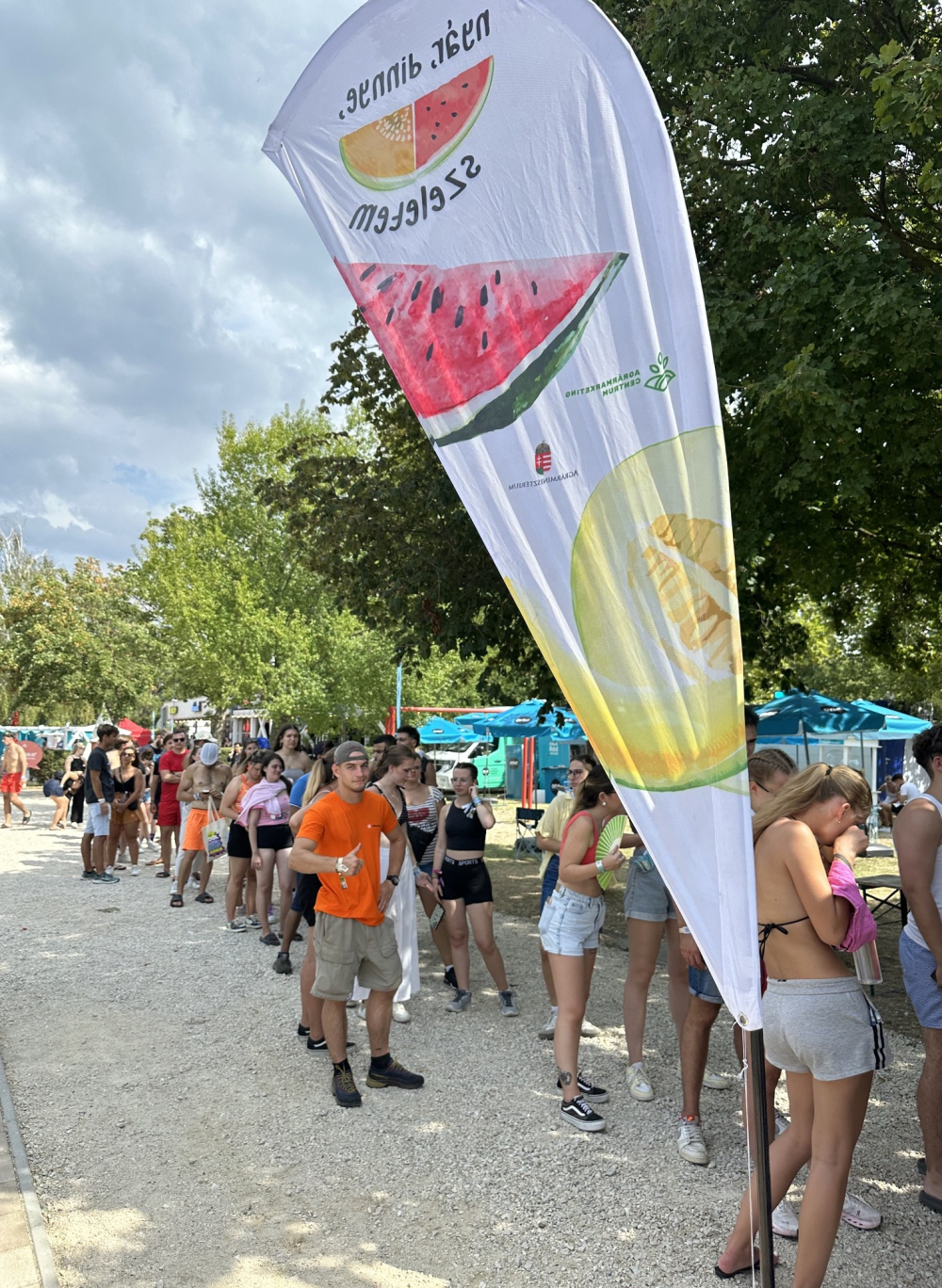
The refreshing fruit was a huge success once again, with interest remaining high in front of the AMC booth throughout the event.
Although watermelon is primarily a favorite refreshment on hot summer days, the season is far from over in late August and early September. While in the past many considered the melon season over around Saint Lawrence’s Day, in recent years—thanks to changes in domestic cultivation and variety selection—we can enjoy Hungarian watermelon and melon for much longer.
The Agricultural Marketing Centre has been regularly promoting Hungarian watermelon and melon at the STRAND Festival for years. The tasting session not only quenches festival-goers' thirst, but also draws attention to the fact that Hungarian watermelon and melon remain a fresh, delicious, and readily available choice in the final weeks of summer and early autumn, making them a great addition to the shopping cart even in September.
Smaller, more convenient, with fewer seeds – melons are changing too
One of the classic "challenges" of eating watermelon is the abundance of seeds, but consumer-friendly solutions exist today. Thanks to modern breeding, smaller varieties—typically weighing 6 to a maximum of 8 kilograms—as well as mini and seedless/micro-seeded varieties, are gaining ground. The varieties commonly referred to as seedless are actually micro-seeded or seed-scarce: a few small, soft seeds may still occur in them. This category is becoming increasingly popular among growers as well, and Hungarian seedless watermelon is now entering export markets.
In Hungarian melon cultivation, more than 1,300 farms are currently growing watermelon, while 310 farmers grow muskmelon/cantaloupe. Watermelon cultivation covers approximately 3,500 hectares.
Not just delicious, but refreshing too
It is no coincidence that watermelon is one of the most popular summer fruits: lightweight, refreshing, and particularly pleasant on hot days thanks to its high water content. Watermelon is approximately 92% water and contains vitamins C, A, and B, as well as magnesium and lycopene. Due to its low calorie count, it easily fits into a health-conscious diet.


