
A Bite of Hungary in Shanghai
Premium foods and specialties are on display at the Agricultural Marketing Centre’s joint pavilion in Shanghai, which is currently hosting one of the world`s most significant international food industry events, SIAL China.
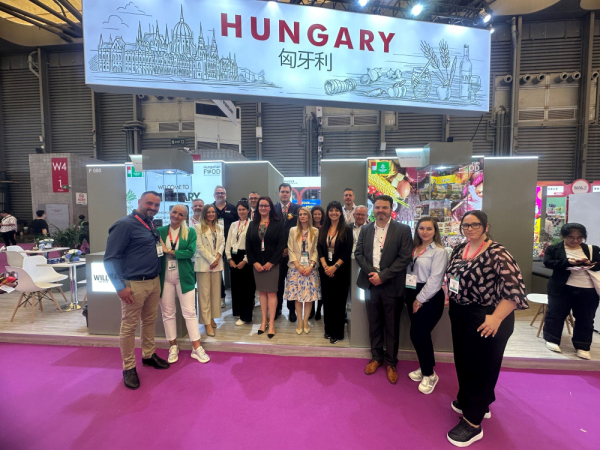 Taking place between May 19–21, 2025, the expo is the sister event of the SIAL exhibition in Paris and stands as the largest food industry showcase not only in China but in all of East Asia, drawing around 5,000 exhibitors and 180,000 professional visitors.
Frozen vegetables, flavored drinking straws, oat bars, and naturally alkaline mineral water are among the products that Hungarian exhibitors are bringing to the attention of foreign buyers at one of the world's largest food and beverage trade fairs. Seven domestic food manufacturers are presenting themselves at the Agricultural Marketing Centre’s 90-square-meter joint pavilion, with an offering that spans almost every segment, from organic and free-from products to traditional Hungarian foods. At the exhibition, a representative from the Hungarian Food Business Program—the AMC’s export development branch—is continuously registering foreign buyers interested in Hungarian products into their online system.
In light of the growing interest in the Chinese market, Hungarian companies are preparing more consciously for the challenges of the Far Eastern market. SIAL serves not only as a platform for introduction and market assessment but also as a venue for actual business negotiations.
The People's Republic of China is one of the world's largest consumer markets, with a population of over 1.4 billion. The growth of the middle class and the spread of health-conscious lifestyles have generated demand for new, premium-quality products. Hungarian food industry products—especially organic, free-from, and natural goods—stand a good chance in this environment. At the same time, entering the Chinese export market is not just an opportunity, but a process requiring serious preparation. Products must always be registered in the so-called GACC (General Administration of Customs of China) system, and depending on the product group, numerous permits and certificates must be obtained. Chinese consumers often make decisions based on emotion; the origin story of the product, the brand background, as well as the aesthetics and quality of the packaging are highly important to them.


