
Hungarian Food Exports Open Toward the Baltics
The food export development division of the Agricultural Marketing Centre held its latest business development meetings in the Baltic region, specifically in Lithuania and Latvia, between November 10–13, 2025. The series of events in Vilnius and Riga aimed to strengthen Hungarian–Baltic agricultural and food industry relations and create new export opportunities for Hungarian small and medium-sized enterprises.
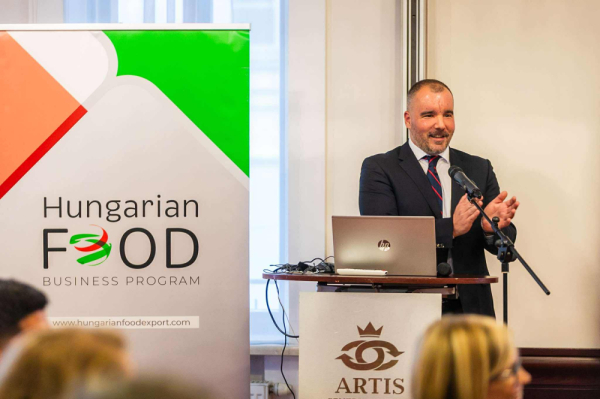 During the four-day program, more than 15 Hungarian food companies showcased their products in Lithuania and Latvia, including both well-known brands and innovative SMEs representing traditional Hungarian flavors as well as modern, health-conscious product development. The Hungarian exhibitors presented a wide product range, including wines, sparkling wines, pálinka, snacks, biscuits, gluten- and lactose-free bakery products, smoked meats, rice products, organic foods, and plant-based innovations.
Two-Day Business Forum in Vilnius and Riga
The program began on November 10 in Vilnius, where market insight presentations and visits to local retail chains helped Hungarian companies gain a better understanding of the Baltic market. At the B2B event held on November 11, Hungarian businesses met with Lithuanian buyers. The delegation then traveled to Riga, where participants attended similar market briefings and, the following day, Hungarian companies introduced themselves to Latvian and regional buyers.
The Baltic countries — Estonia, Latvia, and Lithuania — have become increasingly important target markets for Hungarian food exports in recent years. After a decline following the political transition in Central and Eastern Europe, Hungary’s accession to the European Union gave new momentum to trade relations, with commercial turnover steadily increasing over the past decade.
Although the Baltic markets are relatively small and price-sensitive, they offer several niche opportunities where Hungarian SMEs can remain competitive. Particularly promising areas include gourmet and premium products, as Baltic consumers are increasingly seeking unique, high-quality foods. Another strong growth segment is healthy and “free-from” foods. As across Europe, health consciousness is rising in the Baltics, creating opportunities for Hungarian-made gluten-free bakery products, sugar-free sweets, vegan ingredients, and high-protein snacks to find distributors in the region.
International Presence – From Athens to Bucharest
Before the Baltic business forum, 14 Hungarian companies met Greek buyers in Athens on October 20–21. The next stop of the Hungarian Food Business Program’s B2B events will take place in Bucharest on November 26–27, where Hungarian food industry SMEs will be able to assess opportunities in the Romanian and Balkan markets.


